 The Rural Municipality of Willowdale No. 153 (2021 population: 248) is a rural municipality (RM) in the southeast portion of the Canadian province of Saskatchewan within Census Division No. 5 and SARM Division No. 1. The RM of Willowdale No. 153 incorporated as a rural municipality on January 1, 1913.
Originally known as Local Improvement District No. 153, the first meeting was held on January 3, 1910 at the Armstrong Hotel in Whitewood with H.A. Wiley to hold the position of Chairman and J.J. Carson to act as Secretary. By March of 2011 it was proposed that the Local Improvement District join the Saskatchewan Association of Rural Municipalities.
The first meeting of the Rural Municipality No. 153 was held January 11, 1913 with Secretary-Treasurer J. Pearson appointed as Returning Officer for the election of Reeve.
An early motion proposed naming the municipality the RM of WhiteHorse. This was soon changed to Willowdale in reference of the many willowed ravines or dales in the municipality with second choice of Mashallsay for Charles Marshallsay who was once a member of the North West Council for the Whitewood District.
Heritage Properties
New Finland is a Finnish speaking block settlement located within the RM. The St. John's New Finland Lutheran Church, with an active congregation, was officially declared a municipal heritage property on May 4, 2007. The church building was built in 1907, and then the community moved it in 1934 by steam engine to the present location five miles south of the original construction site. This arduous undertaking necessitated sawing the church in half.
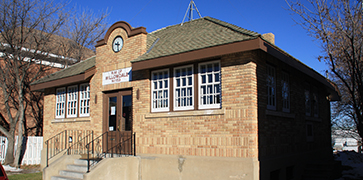
The RM's municipal office building, located at 711 Lalonde Street in Whitewood, was originally built in 1935 to house Whitewood's post office. The building is a designated heritage property. The building was constructed by the federal government as a make-work project during the depression era.
Demographics
In the 2021 Census of Population conducted by Statistics Canada, the RM of Willowdale No. 153 had a population of 248 living in 91 of its 99 total private dwellings, a change of -15.6% from its 2016 population of 294. With a land area of 594.03 km2 (229.36 sq mi), it had a population density of 0.4/km2 (1.1/sq mi) in 2021.